
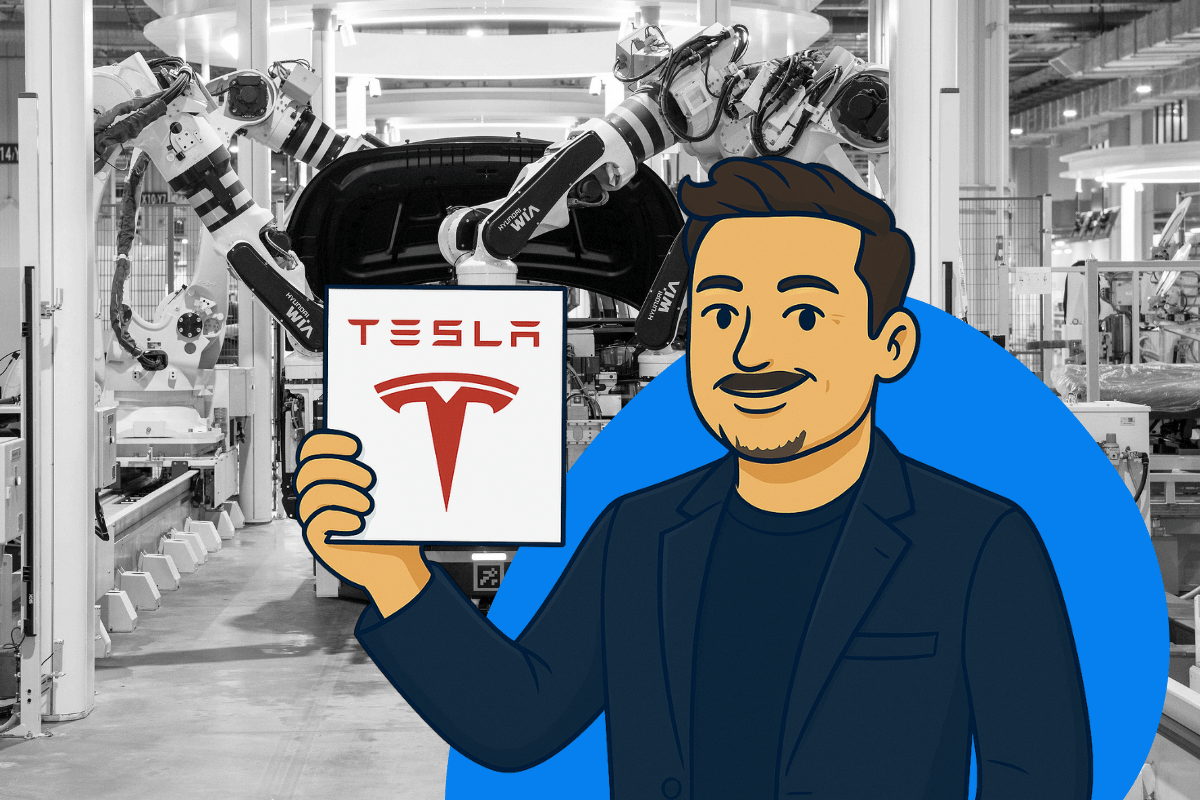

Tesla is more than just an electric car company. It’s one of the most disruptive forces in modern technology, reshaping how the world thinks about energy, transportation, and automation. Led by Elon Musk, Tesla has become a symbol of innovation and ambition, combining cars, software, and artificial intelligence into one powerful ecosystem. Whether you’re a student, engineer, or entrepreneur in South Africa, understanding Tesla gives you a window into the future of how we’ll move, power, and connect our world. Also who wouldn’t love to see Elon Musk with a goatee? Anyone? Just me?
What is Tesla?
Tesla, Inc. is an American technology and energy company founded in 2003. Its mission is simple but bold: to accelerate the world’s transition to sustainable energy. Most people know Tesla for its sleek electric vehicles, but the company’s reach goes much further, into batteries, solar energy, self-driving software, and AI robotics.
Tesla’s business sits at the intersection of several fast-growing industries:
- Automotive technology: Electric vehicles (EVs) like the Model 3 and Model Y.
- Energy storage: Home and commercial batteries through the Powerwall and Megapack.
- Solar energy: Roof panels and systems for clean power generation.
- AI and automation: Self-driving technology and humanoid robotics (Tesla Bot).
Tesla is not just building cars, it’s building a technological ecosystem that connects clean energy, intelligent machines, and sustainable living.
Why Tesla matters globally
Before Tesla, electric cars were slow, expensive, and niche. Now, they’re the future. Tesla changed the perception of EVs by making them fast, desirable, and digitally advanced. Its breakthroughs in battery technology and charging infrastructure pushed the entire automotive industry to catch up.
Key ways Tesla has disrupted the world:
- Mainstreamed electric vehicles: Making EVs aspirational and affordable.
- Advanced self-driving tech: Leading research in computer vision and AI-powered mobility.
- Reimagined manufacturing: Using robotics, automation, and real-time data to build smarter factories.
- Integrated energy: Offering a full clean-energy loop, generate, store, and use electricity sustainably.
These shifts have forced traditional carmakers, from Toyota to BMW, to accelerate their own electric and software strategies.
What does Tesla actually make?
Tesla’s core products fall into four main areas:
- Electric Vehicles (EVs): Models like the Model S, Model 3, Model X, and Model Y dominate global EV sales.
- Energy Products: Powerwall, Powerpack, and Megapack store renewable energy for homes and utilities.
- Solar: Solar Roof and panels turn homes into micro-power stations.
- AI and Robotics: Autopilot and Full Self-Driving (FSD) are training massive AI models to navigate roads; Optimus, Tesla’s humanoid robot, uses the same technology to perform physical tasks.
How Tesla uses AI
Tesla’s cars are effectively robots on wheels. Each vehicle is equipped with sensors, cameras, and AI chips that feed data back to Tesla’s neural network. This allows Tesla to train its self-driving algorithms on billions of kilometres of real-world driving data.
Tesla also designs its own AI supercomputer, Dojo, built to process video data at an enormous scale. This makes it one of the few companies capable of building AI systems that learn from the physical world, not just the internet.
In the future, this same technology could power autonomous delivery vehicles, factory robots, or even domestic assistants.
Why Tesla matters for South Africa
Even though Tesla doesn’t sell cars locally yet, its impact is already being felt. South Africa’s energy, transport, and innovation sectors are moving in Tesla’s direction — towards sustainability, electrification, and automation.
Here’s why you should care:
- Renewable energy potential: Tesla’s solar and battery models show what’s possible in a load-shedding-prone country. South Africa could adopt similar energy storage and microgrid solutions.
- Job creation in green tech: As EVs and clean energy expand, there will be demand for technicians, coders, and engineers with sustainability skills.
- Inspiration for startups: Tesla’s combination of engineering, design, and software thinking is a model for South African innovators solving infrastructure problems.
- Local connection: Elon Musk was born in Pretoria — proof that world-changing innovation can start in South Africa and scale globally.
Disruption and the road ahead
Tesla’s disruption goes beyond the car industry — it’s redefining the relationship between humans, machines, and the planet. But it’s not without controversy. The company has faced criticism for its aggressive timelines, labour practices, and Musk’s unpredictable leadership style.
Still, the results are undeniable. Tesla forced the entire global market to take electric mobility and sustainable energy seriously — accelerating what could have taken decades.
Looking forward, Tesla aims to:
- Launch a fully self-driving car that needs no human input.
- Expand Dojo to become a leading global AI platform.
- Scale up battery production to reduce global fossil-fuel dependence.
- Turn solar and energy products into everyday infrastructure.
Tesla isn’t just making products — it’s trying to rewrite the operating system of modern civilisation.
What you can learn from Tesla
For South Africans entering tech, Tesla offers powerful lessons:
- Engineering with purpose: Every Tesla innovation links to a clear mission — sustainability.
- AI + hardware fusion: The future belongs to those who can combine code with physical systems.
- Think in systems: Tesla integrates software, energy, manufacturing, and design — a mindset that can be applied to African challenges too.
- Start local, think global: Big change begins with solving one clear problem better than anyone else.
Final thought
Tesla’s story isn’t just about cars — it’s about reimagining what’s possible when technology serves a mission bigger than profit. For South Africans, it’s a glimpse of the kind of innovation the continent can lead: sustainable, bold, and future-focused.
Whether you dream of building EVs, coding AI, or designing clean-energy systems, understanding Tesla helps you understand the world we’re heading into — one where software drives not just our devices, but our entire way of life.