

Artificial intelligence (AI) is no longer a distant concept — it’s already shaping industries across the world. In Africa, it has the potential to do even more: close infrastructure gaps, improve access to services, and create new industries. When applied thoughtfully, AI could become one of the continent’s most powerful tools for development. Three sectors where this transformation is already beginning — and where the impact could be revolutionary — are healthcare, law, and agriculture.
1. Healthcare: Diagnosing Faster, Treating Smarter
Africa faces critical healthcare challenges — from under-resourced hospitals to limited access to specialists in rural areas. AI can bridge these gaps by making healthcare more predictive, personalised, and scalable.
Key transformations
- Early diagnosis: AI models trained on medical images can help detect diseases like tuberculosis, cervical cancer, and malaria faster and more accurately. Projects such as AI for Good Africa are piloting machine-learning tools that screen X-rays and blood samples where doctors are scarce.
- Remote care: AI-powered chatbots and telemedicine platforms can guide patients through symptom checks, connect them to clinics, or manage chronic conditions like diabetes.
- Resource management: Predictive AI systems can forecast drug shortages, optimise ambulance routes, or flag supply chain risks for hospitals.
- Medical training: Generative AI tools can simulate rare clinical scenarios, helping nurses and medical students learn through low-cost virtual practice.
Why it matters
For South Africa and neighbouring countries, where public health systems are stretched, AI doesn’t replace doctors — it scales their reach. With the right infrastructure and regulation, AI could enable earlier interventions, fewer misdiagnoses, and more equitable care in remote communities.
2. Law: Making Justice More Accessible and Transparent
Legal systems in many African countries are overburdened, under-digitised, and difficult for ordinary citizens to navigate. AI can make justice systems faster, clearer, and more transparent — but only if implemented responsibly.
Key transformations
- Legal research automation: AI assistants can scan case law, legislation, and court rulings in seconds, giving lawyers and judges faster access to relevant precedents.
- Document drafting: Generative AI tools can draft contracts, affidavits, or employment agreements in plain language, cutting costs for small firms and startups.
- Access to justice: Chatbots trained on local law could guide citizens through small claims, rental disputes, or UIF processes — a game-changer for people who can’t afford legal help.
- Court efficiency: AI systems can assist with scheduling, transcription, and document management, speeding up backlogged cases.
Why it matters
In South Africa, access to legal support remains unequal. AI could help demystify legal language, reduce fees, and open the door for more inclusive justice. However, safeguards are essential — data privacy, POPIA compliance, and bias monitoring must be built into every solution to ensure fairness and accountability.
3. Agriculture: Feeding a Continent with Data
Agriculture employs more than half of Africa’s workforce, yet smallholder farmers face unpredictable weather, low yields, and poor market access. AI-powered systems can turn data into resilience — helping farmers grow smarter, not harder.
Key transformations
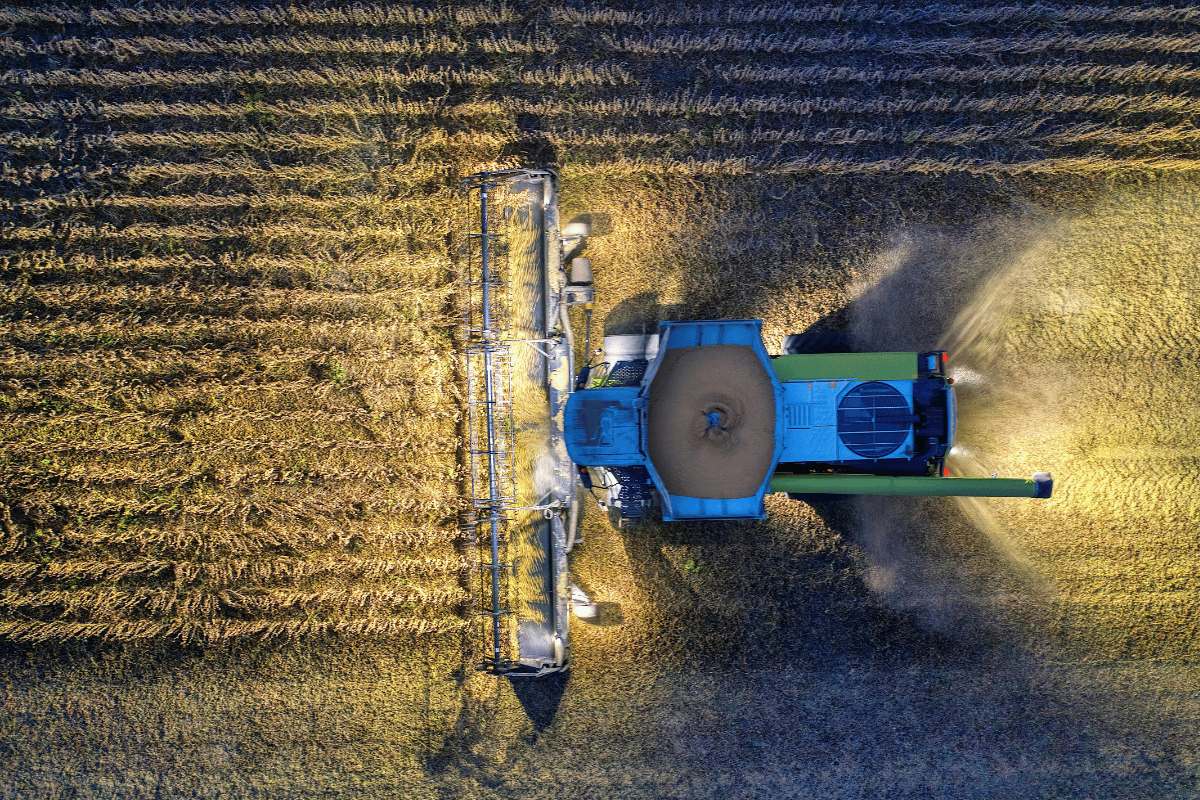
- Precision farming: AI-driven sensors and drones can analyse soil health, detect pests, and optimise irrigation, reducing waste and boosting productivity.
- Weather prediction: Machine-learning models can generate localised forecasts, helping farmers plan planting and harvesting around rainfall patterns.
- Market intelligence: AI can match farmers with buyers, track price trends, and suggest optimal selling times, improving income stability.
- Credit and insurance: Algorithms using satellite data and crop imagery can assess risk, enabling fairer access to finance and micro-insurance.
Why it matters
For countries like Kenya, Nigeria, and South Africa, AI-based agricultural innovation could significantly reduce food insecurity. Combined with mobile technology — already widespread in rural Africa — AI offers a realistic way to modernise farming without massive infrastructure costs.
4. Barriers to Overcome
AI’s promise is vast, but real transformation depends on overcoming persistent challenges:
- Data availability: Many African systems lack the high-quality, labelled data that AI needs to work effectively.
- Connectivity and infrastructure: Rural areas often have limited internet and electricity access.
- Skills gap: There’s a shortage of trained AI engineers, ethicists, and domain experts across the continent.
- Ethical oversight: Without clear regulation, AI could replicate global inequalities or create new risks around privacy and bias.
Governments, universities, and private sector players are starting to address these gaps — from Kenya’s AI policy roadmap to South Africa’s National Artificial Intelligence Institute. The key will be balancing innovation with inclusion and ethics.
5. The Road Ahead: African Innovation on African Terms
AI can’t simply be imported — it must be localized. That means training models on African data, in African languages, for African problems. From healthcare diagnostics using local patient data to chatbots that understand isiZulu or Swahili, localisation will ensure relevance and fairness.
As startups, governments, and researchers across the continent invest in AI, the opportunity isn’t just to adopt global technology — it’s to shape it. Africa has the chance to define how AI is used ethically, inclusively, and for public good.
Key Takeaway
AI could become one of Africa’s most powerful tools for progress — if it’s built with local insight and ethical guardrails. In healthcare, it can save lives; in law, it can deliver fairness; in agriculture, it can secure food and livelihoods. The future isn’t about replacing people — it’s about empowering them with smarter tools to solve Africa’s most pressing challenges.
The next generation of African developers, entrepreneurs, and policymakers won’t just use AI. They’ll teach it to understand Africa.